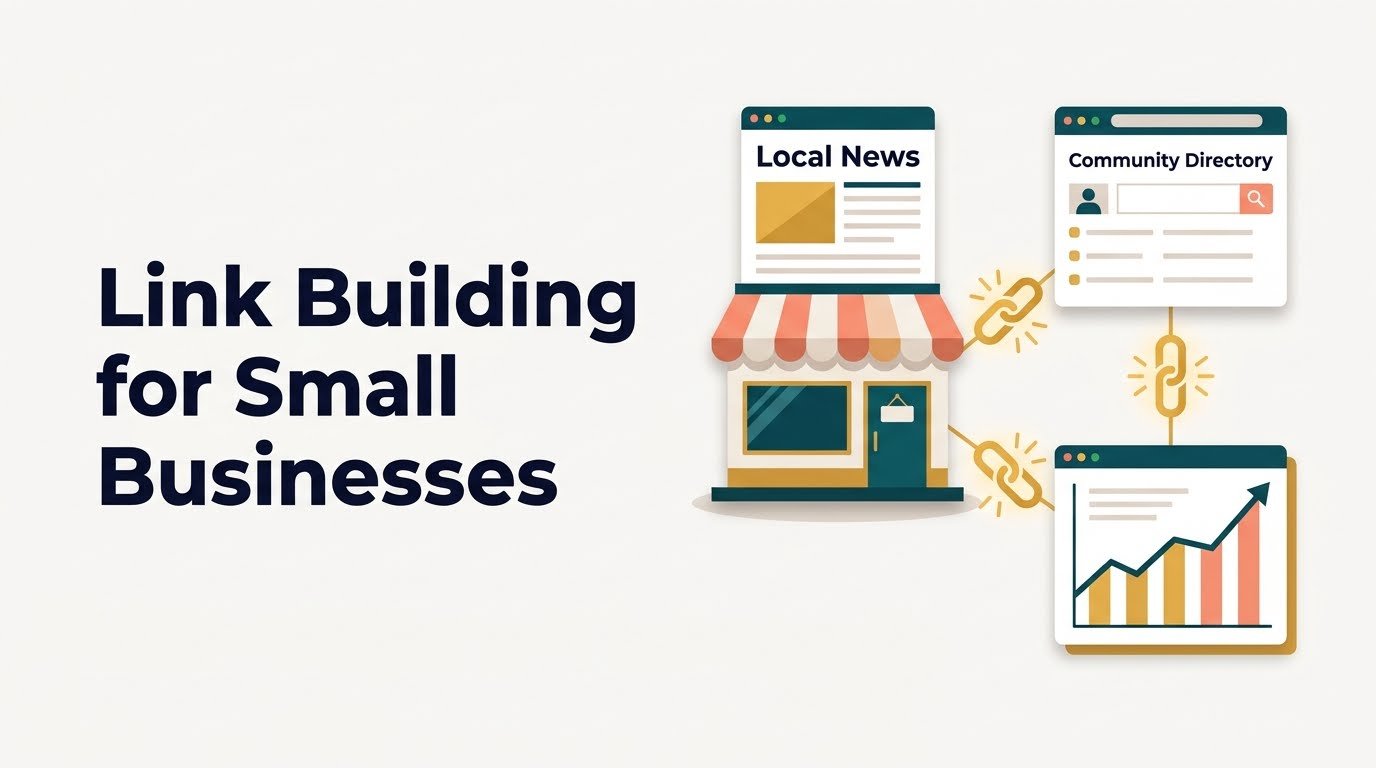


The best way to start link building for a small business is to begin free and local, then earn links with one useful page, and only then add outreach and guest posts. This order costs the least, carries the lowest risk and gives you links from sites that actually fit your business.
Below is a simple 90-day plan, a list of local link sources you probably already have, three budget tiers and a free way to track results. If you are new to the basics, read our beginner’s guide to link building first.
Link building for small businesses: what to expect
Link building means getting other websites to link to yours. Search engines use those links to find pages and to judge which ones other sites find worth mentioning. For a small business, the goal is not a huge number of links. It is a steady set of relevant links from real sites.
Links take time. Pages need to be published, found and re-crawled, so plan for months, not days. As a working assumption (ours, not a benchmark), set aside about three hours a week for the 90 days below.
Before you start: three quick checks
- Your site works. Pages load, the contact details are correct and your main service pages are readable on a phone. A link to a broken page wastes the effort. Our SEO audit checklist covers this.
- You know your best pages. Pick two or three pages you want links to, such as a main service page and one helpful guide.
- You know the rules. Google’s spam policies treat links made to manipulate rankings as spam, and paid links should be labeled
sponsoredornofollow, as explained in Google’s guide to qualifying outbound links.
The 90-day plan
Days 1 to 30: free and local links
Start with links that need no pitch and no budget.
- Claim your listings. Set up or check your Google Business Profile and the main directories for your industry. Keep your business name, address and phone number the same everywhere.
- Ask people who already know you. Suppliers, partners, manufacturers you resell and software you use often have a partners or customers page. Ask politely to be listed.
- Join local and industry groups. The chamber of commerce and trade associations usually list members with a link.
- Find unlinked mentions. Search your business name in Google. If a site mentions you without linking, send a short thank-you and ask them to add the link.
These links are often labeled nofollow or sit on directory pages, and that is fine. They build trust and send real visitors, and they form the base of a natural profile.
Days 31 to 60: earn links with one useful page
Pick one page that people would want to reference. It does not need design skills. Good small business options include a local cost guide, a checklist, a simple calculator, a short guide to a common problem or a page of original photos and numbers from your own work.
Then tell the right people about it: customers, partners, local bloggers and groups that serve the same audience. One useful page that is shared by five relevant sites is worth more than fifty random directory links. To judge whether a link is worth having, use our guide to what makes a good backlink.
Days 61 to 90: outreach and guest posts
By now you have a stronger site and a few real links, so outreach is easier. Choose a small number of relevant blogs and publications, read what they publish and pitch something that fits. Our guides on guest posting outreach and the guest post pitch email show how. If you are new to the idea, start with what a guest post is.
Outreach is the slowest part of the plan, so do not start here. It works best after the free and local steps are done.
Local link sources most small businesses already have
| Source | How to ask | Effort |
|---|---|---|
| Suppliers and manufacturers | Ask to be added to a dealer, partner or “where to buy” page | Low |
| Chamber of commerce | Complete your member profile with your website | Low |
| Trade associations | Same, plus ask about member spotlights | Low |
| Local sponsorships (school teams, charity events) | Ask whether the sponsor list links to the sponsor’s site | Medium, may cost money |
| Customers and case studies | Offer a short testimonial, or ask a happy customer to mention you | Low to medium |
| Local news and blogs | Share something useful or newsworthy, such as an opening, an award or local data | Medium |
| Software and tools you use | Many list customers or reviews. Ask if they accept submissions | Low |
A sponsorship is not a paid link scheme when you are supporting a real local group, but if the link is part of the deal, ask for it to be labeled sponsored or nofollow.
What it costs: three budget tiers
We do not quote prices here because they vary by market. This table shows what each tier buys in terms of work, not dollars.
| Tier | What you do | Best for |
|---|---|---|
| Free | Listings, partner and supplier links, unlinked mentions, one useful page, a few personal pitches | Very small budgets and new sites |
| Small | Free tier plus a modest sponsorship, a basic backlink checker or a few well-chosen guest posts | Businesses ready to add steady effort |
| Outsourced | A specialist finds relevant sites, writes and places the content, and labels paid placements correctly. See our guest post service | Busy owners who want it done properly |
Before paying for any placement, read our guide to free vs paid guest posting.
A short outreach email example
Use something like this when you ask a supplier or partner for a listing. Keep it short, specific and polite.
Subject: Quick request: partner listing
Hi Maria, we have been buying from you for three years and recommend your products to our customers in Phoenix. I noticed you list partners on your website. Would you be open to adding us? Our page is [your URL], and I am happy to send a logo or a short description. Thank you either way.
No flattery, no pressure and no mention of SEO. People respond to a clear, reasonable request.
How to track results for free
- Google Search Console. Open the Links report to see which sites link to you and which pages get the most links.
- Google Analytics (GA4). Check referral traffic to see which links send real visitors.
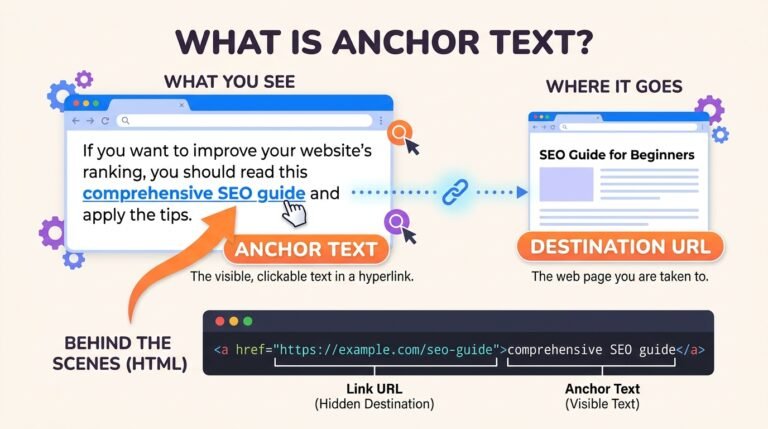
- A simple sheet. List each link, the date, the page it points to, the anchor text and the label. Update it monthly.
If rankings, calls or form fills rise on the pages you built links to, the plan is working. If nothing moves after three months, review the quality of the links before adding more.
Mistakes that waste a small budget
- Buying link packages. Bulk packages from unknown sellers are the fastest way to waste money and risk a penalty.
- Mass directory submissions. Hundreds of low-value directories do little for a local business.
- Exact-match anchors everywhere. Use your brand name and descriptive phrases. See types of backlinks.
- Unlabeled paid links. Paid placements should be marked
sponsoredornofollow. - Chasing big sites that are off-topic. A local, relevant site is usually a better fit than a famous one that has nothing to do with you. Our guide on checking guest post site quality helps you tell the difference.
- Expecting overnight results. Links work over months. Keep a steady routine instead of a burst.
Worked example: a Phoenix HVAC company
This is an illustration, not a real client. A small HVAC company in Phoenix follows the plan.
| Period | What the company does |
|---|---|
| Days 1 to 30 | Updates its Google Business Profile, joins the local chamber of commerce, asks two equipment manufacturers to list it as a dealer, and asks a local news site that mentioned the company to add a link |
| Days 31 to 60 | Publishes a plain-language guide to preparing an air conditioner for summer, with photos from its own jobs, and shares it with customers and a neighborhood association |
| Days 61 to 90 | Pitches one home improvement blog with a practical guest post on lowering cooling costs, and tracks every new link in a sheet |
None of these steps needs a large budget. Each one is a link a real person had a reason to give.
Frequently asked questions
How much should a small business spend on link building?
Start with the free tier. Add budget only for things that clearly help, such as a local sponsorship or a few relevant guest posts. Be careful with anyone who promises a fixed number of links for a fixed price.
How long does link building take to work?
Usually months. Links must be published, found and counted, and rankings depend on many other factors. Judge progress after a few months, not a few weeks.
Can I do link building myself?
Yes. The free and local steps need no special skills. Outreach takes patience and good targeting, which is where many owners choose to get help.
Do local directories still help?
A small number of relevant ones can help with trust and local visibility. Hundreds of low-quality directories usually do not.
Are nofollow links worth getting?
Yes, when they come from relevant, real sites. They can send visitors and make your profile look natural. Read more in our guide to types of backlinks.
Should I buy backlinks?
Paying for a link that passes ranking credit goes against Google’s spam policies unless the link is labeled. If you pay for a placement, ask for the sponsored label and choose relevant sites.
The short version
Start with free and local links, build one useful page worth linking to, then add careful outreach. Track every link, keep the anchors natural and label paid placements. A steady routine beats a rush of cheap links.
Want someone to handle the outreach properly? Talk to NextGen Digital about a guest post plan that fits your budget.
Related guides