

Link building is the work of getting other websites to link to pages on your site. Search engines use those links to find pages and judge how trusted they are, so a few good links from relevant sites can help a business show up where its customers search.
This guide explains how link building works, which links are worth chasing, which tactics are safe, and how a small business can start without a big budget. It is part of our wider SEO basics, and it focuses on links only.
What is link building?
Link building is any planned effort to earn links from other websites to your own. A link is a clickable reference on another page that points to yours. If a local news site mentions your bakery and links to your website, that is a backlink. Getting that mention to happen, on purpose, is link building.
A quick test: if the main goal is to get a link from a site you do not own, it is link building. Writing a helpful article only for your own blog is content marketing. It can attract links, but it becomes link building when you also take steps to earn them.
Link building is one part of what SEO professionals call off-page SEO, which also covers brand mentions and reviews. Here we stay on the links.
Why links still matter for Google
Search engines have long treated a link as a kind of vote. A page that many trusted sites link to is more likely to be useful, so it has a better chance to rank. Ahrefs describes links the same way and connects the idea to Google’s original PageRank system.
Links also help search engines discover pages. A new page with no links pointing to it can take longer to be found than one linked from a site that is already crawled often.
Links are only one part of ranking. Content quality, page experience and how well a page answers the search all matter too. Our guide on how SEO works shows where links fit. A good link will not rescue a poor page, which is why we suggest an SEO audit before you build links.
What a link is made of
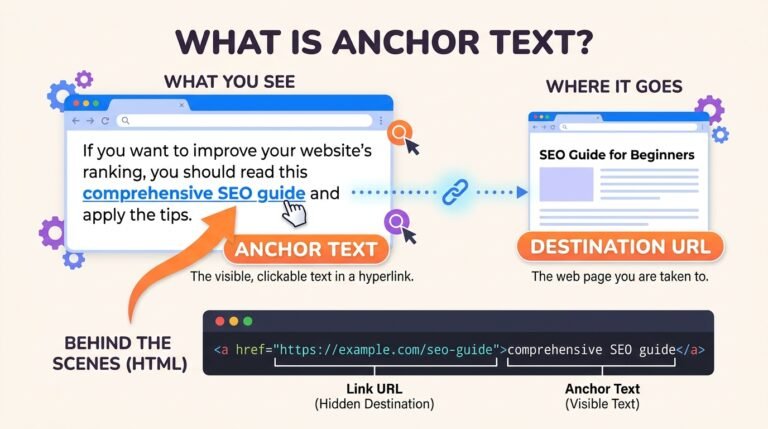
A link has three parts you should know:
- The destination URL. The page the link points to.
- The anchor text. The words the reader clicks on. Descriptive anchors such as “our roof repair guide” tell readers and search engines what to expect. Our guide to anchor text covers the types and a safe mix.
- Link attributes. Optional labels that tell Google how the link should be treated.
Google’s guidance on qualifying outbound links describes three labels:
| Attribute | Use it for |
|---|---|
rel="sponsored" |
Ads and paid placements |
rel="ugc" |
User-generated content such as comments and forum posts |
rel="nofollow" |
Links you do not want Google to associate with your site, when the other labels do not apply |
For paid links, Google says sponsored is preferred, though nofollow is still acceptable. A link with none of these labels is a normal link that can pass ranking credit. Our guide to types of backlinks explains each label in detail.
Four ways to get a link
Most link building falls into four groups. The group matters because it decides the cost, the speed and the risk.
| Way | What it means | Example | Risk |
|---|---|---|---|
| Earned | Others link to you because your page is useful | A local blog cites your moving checklist | Low. Slow and hard to control |
| Asked | You contact a site and ask for a link | You pitch a guest article or suggest a fix for a broken link | Low when relevant and honest |
| Added | You place the link yourself on a site you control or can edit | A business profile or an industry directory listing | Low value. Fine as a foundation |
| Bought | You pay for the placement | A sponsored post or paid link insertion | Rises if the link passes ranking credit and is not labeled |
The Ahrefs guide groups tactics in the same four ways, and it warns that buying links can risk penalties.
What makes a link worth getting
One good link beats many weak ones. Judge each opportunity on four points (our guide to what makes a good backlink goes deeper with seven):
- Relevance. A link from a site about home repair is more useful to a roofing company than one from a recipe blog.
- A real site behind it. Look for real articles, named authors and a real audience. Our site quality scorecard gives you a ten-point check.
- Placement. A link inside the body of an article is usually more valuable than one in a footer or sidebar.
- Natural anchor text. Use your brand name or a descriptive phrase, not the exact keyword you want to rank for every time. Ahrefs notes that over-optimized anchor text is risky.
Do not rely on one score. Authority metrics from SEO tools are rough estimates made by the tool, not by Google. Use them to sort a list, then read the site yourself.
Link building methods that work for small businesses
You do not need every tactic. These suit a business with a small team and a modest budget.
Local and community links
These are often the easiest first links. Think of your chamber of commerce, local business associations, suppliers and partners, sponsored events or teams, and local news sites. Each can link to you from a page that mentions your business, and each is relevant to your local customers. Check what each group does before you pay: a membership you buy only for a link adds little.
Guest posting and link insertions
A guest post is an article you write for another site. A link insertion adds your link to an article that already exists. Both can bring links and readers when the site is relevant and the content is useful. Start with what a guest post is, learn the outreach process and read how to find opportunities on Twitter and LinkedIn. We explain the difference in what is link insertion.
If money changes hands, label the link. We compare the choices in free vs. paid guest posting.
Unlinked mentions and broken links
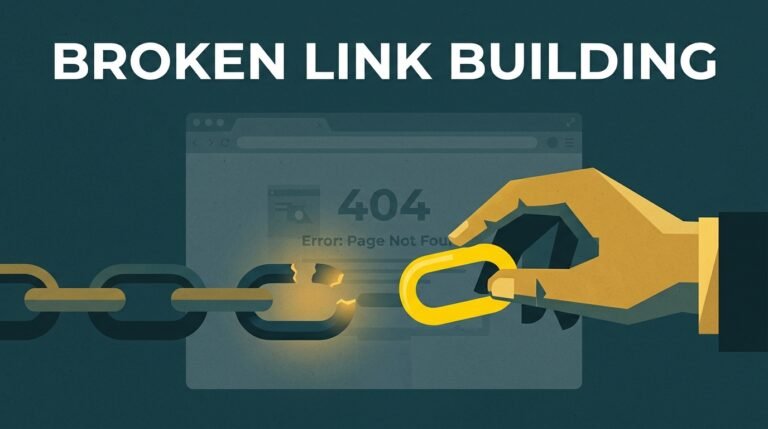
Sometimes a site already mentions your business without a link. A polite email asking them to add one is a quick win. You can also find a page on another site that links to a dead page, and suggest your relevant page as a replacement. Our broken link building guide shows how, step by step. Both ask for something small and helpful.
Content others want to cite
Some pages attract links on their own: original research from your own work, a free calculator, or a clear local guide. This takes more effort, and it pays slowly, so treat it as a long-term project.
Link building tactics to avoid
Google’s spam policies define link spam as creating links mainly to manipulate rankings. The examples it lists include:
- Buying or selling links that pass ranking credit, including swapping goods or services for them.
- Excessive link exchanges and partner pages that exist only to cross-link.
- Using programs or services to create links automatically.
- Sponsored articles, advertorials and guest posts with links that pass ranking credit or use optimized anchor text.
- Links from low-quality directories and bookmark sites.
- Keyword-rich links in widgets, footers or templates spread across many sites.
- Optimized links in forum comments and signatures.
The same page says buying and selling links is fine for advertising when the links use nofollow or sponsored. If a seller promises a fixed number of links in a few days or a rise in rankings, treat that as a warning sign.
Worked example: an Austin dental clinic’s first 90 days
This is an illustration, not a client case. A dental clinic in Austin has a good website but almost no links from other sites.
Weeks 1 to 2: The clinic fixes broken pages and page titles first, so new links land on pages that work. It picks two pages to support: its main services page and a guide on what to expect at a first visit.
Weeks 3 to 6: It asks its chamber of commerce and two local health groups to add a link to its profile. It sponsors a local youth sports team that lists sponsors with links. It asks a local news site that mentioned the clinic to turn the name into a link.
Weeks 7 to 12: The owner writes two practical articles for a local lifestyle blog and one for a regional parenting site, each with one relevant link in the text. Paid placements, if any, are labeled sponsored.
The clinic then checks which links appeared, which pages they point to, and whether referral visits or search impressions changed. It does not expect every link to move rankings.
A starter plan for a small business
- Fix the basics. Make sure key pages load, are indexed and answer the search. Use our SEO audit checklist.
- Pick two or three pages to support. Choose pages that bring customers, not your home page by default.
- Start local. Ask partners, associations, suppliers and local media for relevant links.
- Add one repeatable method. Guest posts, link insertions or broken link outreach work well. Do one well before adding another.
- Track and adjust. Record each link, the page it points to and the date.
For a fuller 90-day version of this plan, see link building for small businesses.
Budget and timing vary widely by business and market, so we do not give fixed numbers. Plan for months, not days, and keep each link honest and relevant.
DIY or outsource?
Doing it yourself costs time, mostly in finding sites, vetting them and following up. If you have more time than budget, start with local links and the guide above. If you have more budget than time, an agency can do the prospecting and vetting for you. Ask any provider to show real sites, explain how links are labeled and avoid guarantees about rankings. We list vetted sites and handle the outreach in our guest post and link insertion service.
How to tell if link building is working
Look at three things over several months:
- New links. Which sites linked, to which page, and with what anchor text. Free tools such as Google Search Console show links to your site. We compare them in how to check your backlinks for free.
- Referral traffic. Visits that come through the links.
- Search performance. Impressions, clicks and rankings for the pages you supported.
Links are one signal among many, so changes in rankings can have other causes. Judge a campaign by the quality of links earned and the pages they support.
Frequently asked questions
What is link building in SEO?
Link building is the practice of earning links from other websites to your own. Search engines use links to discover pages and judge how trusted they are, so relevant links can help pages rank.
Is link building still worth it?
Yes, when the links are relevant and earned honestly. Links remain one of the signals search engines use. Low-quality or manipulative links offer little and can bring risk.
How long does link building take to work?
It varies. Links must be found and counted, and many other things affect rankings, so plan for months. No honest provider can promise a ranking by a certain date.
What is the difference between link building and backlinks?
A backlink is a single link from another site to yours. Link building is the work of earning those links.
Is buying backlinks allowed?
Google treats buying or selling links that pass ranking credit as link spam. Paid links used for advertising are acceptable when labeled with rel="sponsored" or rel="nofollow".
Can a small business do link building without paying for it?
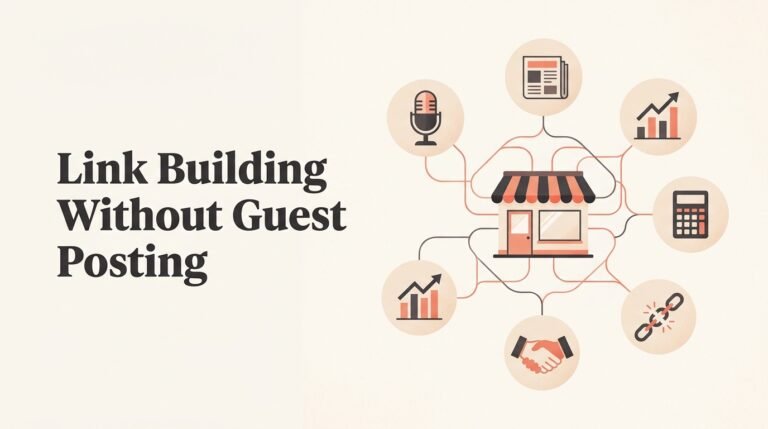
Yes. Local associations, partners, suppliers, local media, unlinked mentions and helpful guest articles can all bring links without payment. They take time, and some cost effort rather than money. Our guide to link building without guest posting covers nine methods.
The short version
Link building means earning relevant links from real sites to pages that help your customers. Start with a healthy website, begin with local links, use one repeatable method, avoid shortcuts that Google treats as spam, and track what you earn.
If you would rather skip the prospecting, NextGen Digital can place your article or link on sites we have already checked. See our guest post and link insertion service.
Related guides
- What is off-page SEO?
- What is a guest post?
- Guest posting outreach
- SEO audit checklist before link building
- Types of backlinks explained
- What is link insertion?
- Link building for small businesses
- What makes a good backlink?
- How to check your backlinks for free
- What is anchor text?
- Link building without guest posting
- Broken link building: a step-by-step guide