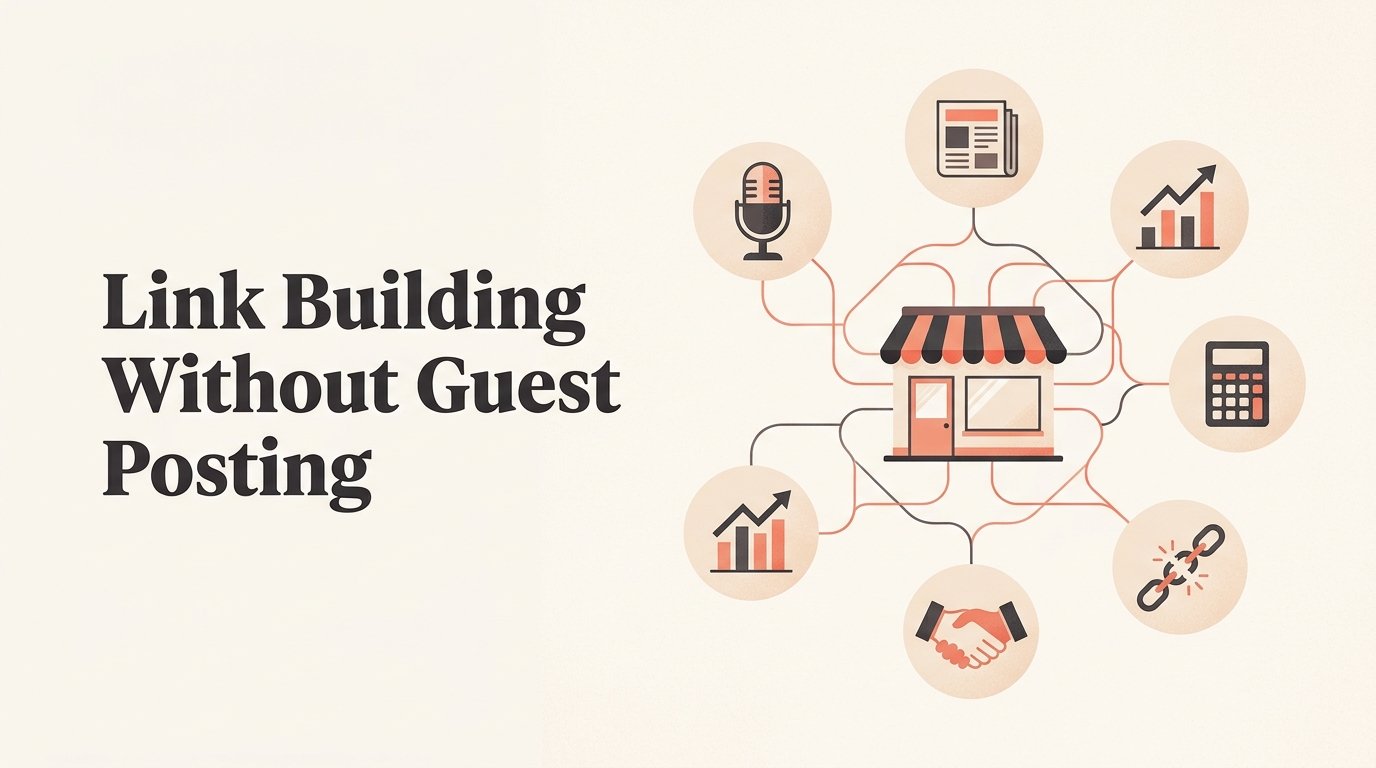


Link building without guest posting means earning backlinks through methods that don’t require you to write an article for another website. The most reliable options are reclaiming unlinked brand mentions, fixing broken links on other sites, getting listed on resource pages, and creating something worth citing, such as original data or a free tool. If you’re new to the topic, start with our guide on what link building is.
Guest posting works, but it isn’t the only way. Writing a 1,200-word article for every link takes time many small businesses don’t have. The good news is that several other methods are faster, cheaper or both.
Can you do link building without guest posting?
Yes. Guest posts are one way to get a link. Many good links come from other places: a supplier’s dealer page, a reporter quoting you, a blog that mentions your business, a resource page that lists your guide.
Google doesn’t rank links by how you got them. It looks at whether a link is a real editorial choice or was made to manipulate rankings. Google’s spam policies describe link spam as links created mainly to manipulate search rankings. That applies to guest posts and to every alternative below. Do any of them at scale with keyword-stuffed anchors, and you have the same problem.
What makes a link worth having is the same no matter the method: a relevant site, real readers and a natural placement. We cover this in detail in what makes a good backlink.
9 link building methods that don’t need a guest post
1. Turn unlinked brand mentions into links
Sites sometimes mention your business by name without linking to you. A local news story, a “best of” list, a partner’s blog post. These are the easiest links to win because the writer already chose to talk about you.
How to do it:
- Search Google for your brand name in quotes and exclude your own site, for example
"Smith Plumbing" -smithplumbing.com. - Set up a free Google Alert for your business name so new mentions reach your inbox.
- Open each result and check whether the mention links to you.
- Email the writer or site owner with a short, friendly request.
A simple email works:
Hi Dana, thanks for including Smith Plumbing in your guide to emergency plumbers in Columbus. Would you be open to linking our name to smithplumbing.com so readers can find us? Either way, we appreciate the mention.
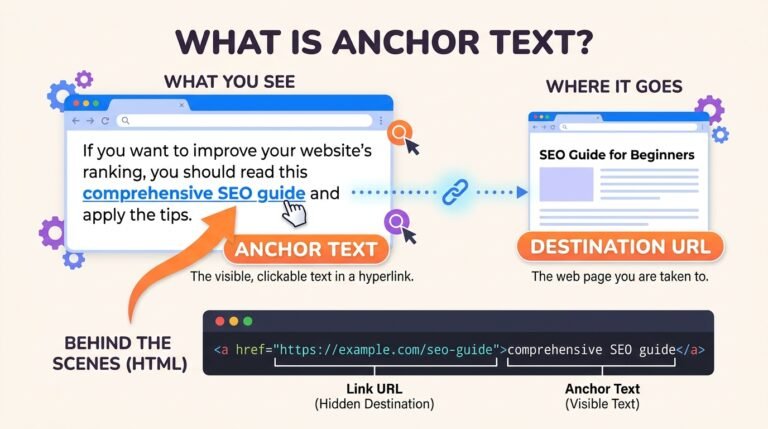
Keep it short. Don’t ask for specific anchor text. Your brand name is the natural anchor here (see our guide to anchor text).
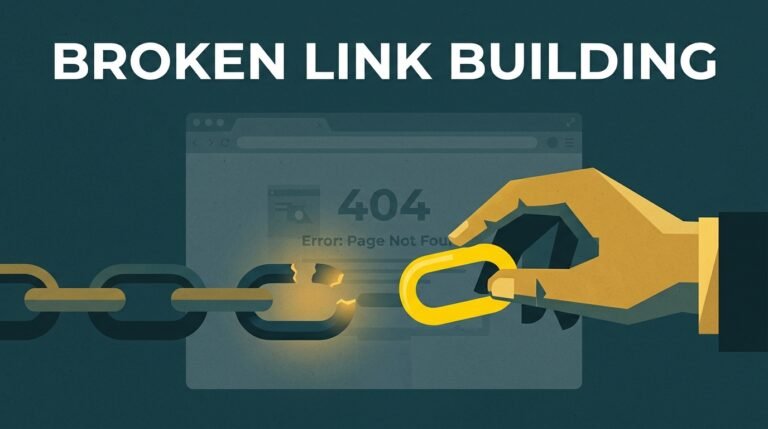
2. Replace broken links on other sites
Pages link to resources that later disappear. When a link breaks, the site owner has a problem, and you can offer a fix.
The short version: find a relevant page with a dead outbound link, check whether you have a page that covers the same topic, and let the owner know about the broken link with your page as a replacement. Lead with the fix, not the ask. Site owners respond better when you help them first.
This method works best when you already have a strong, useful page. It doesn’t work if you have to create a thin page just to match the dead one. Our broken link building guide walks through it step by step.
3. Get listed on resource pages
Many sites keep pages called “resources,” “useful links” or “helpful tools.” Libraries, universities, trade associations, city websites and niche blogs all publish them.
Search for pages like these with queries such as:
"home buyer resources" Columbus"helpful links" + small business taxesintitle:resources + roofing
Then check two things before you reach out. Is the page maintained (are other links working)? Would your page actually help that page’s readers? If both answers are yes, send a short note explaining what your page offers and why it fits their list.
4. Ask partners, suppliers and local groups
You likely have links waiting for you already. Suppliers often have “where to buy” or “certified installer” pages. Chambers of commerce link to member profiles. Trade associations list members. Software you use may feature customers.
We list the most common local sources in our 90-day link building plan for small businesses. Most take one email and cost nothing.
5. Answer journalists’ source requests
Reporters and bloggers often look for experts to quote. Some post requests on social media (search for hashtags like #journorequest on X). Others use source-request services and newsletters. When they publish, many credit your name with a link to your site.
To make this work:
- Reply fast. Reporters work on deadlines and often pick the first useful answers.
- Answer the question asked in 3–5 sentences, with a specific fact or example from your work.
- Include your name, title, business and website in the reply.
Not every quote comes with a link, and many links from news sites are nofollow. That’s fine. Press mentions still bring referral visits and trust, and a mix of link types looks natural. Read more in types of backlinks.
6. Be a guest on podcasts
A podcast interview is like a guest post you talk through instead of write. Most shows publish an episode page with show notes, and many link to the guest’s website.
Look for local business podcasts and industry shows that interview owners like you. Pitch one clear topic you can speak about with real examples. Then share the episode on your channels. Hosts notice guests who help promote the show, which leads to more invitations.
7. Publish original data people cite
Writers need numbers. If you’re the source, they link to you. This is one of the strongest ways to earn links without asking for them.
You don’t need a big research budget. Use data you already have:
- A roofing company could publish the average age of the roofs it replaced last year.
- A dental clinic could share the most common questions patients asked at first visits.
- A CPA firm could survey 50 clients on how they track business expenses.
Publish the findings on a clear page with a short summary, a simple chart and a note on how you collected the data. Then send it to local reporters and bloggers who cover your industry.
8. Build a free tool or calculator
A simple, useful tool attracts links for years. Think of a mortgage payment calculator for a real estate agent, a paint quantity calculator for a painting contractor, or a tip calculator for a payroll service.
The tool should solve one problem well and load fast. If you offer an embed code so other sites can add your tool, be careful with the credit link. Google has warned against keyword-rich, hidden or low-quality links in widgets, and recommends nofollow on such links. A plain brand-name credit is the safer choice.
9. Give testimonials and case studies
Businesses you buy from want proof that their product works. Offer a short testimonial or agree to a case study. Many vendors publish customer stories with a link to the customer’s website.
Only do this for products you actually use and like. A testimonial written only to get a link is easy to spot, and it doesn’t help the vendor’s readers.
One more option is asking a site to add your link to an article that already exists. This is called a link insertion or niche edit, and it has its own rules. Read what link insertion is before you try it.
The 9 methods compared
| Method | Effort | Cost | Time to first link | Risk |
|---|---|---|---|---|
| Unlinked brand mentions | Low | Free | Days to weeks | Low |
| Broken link replacement | Medium | Free | Weeks | Low |
| Resource pages | Medium | Free | Weeks | Low |
| Partners, suppliers, local groups | Low | Free to low (sponsorships) | Days to weeks | Low |
| Journalist source requests | Medium | Free | Days to weeks | Low |
| Podcast guesting | Medium | Free | Weeks to months | Low |
| Original data | High | Low to medium | Weeks to months | Low |
| Free tool or calculator | High | Medium (build cost) | Months | Low, unless you add keyword links to embeds |
| Testimonials and case studies | Low | Free | Weeks | Low |
These ratings are our general guide, not measured averages. Results depend on your niche, your existing site and how well you pitch.
Start with the low-effort rows. Unlinked mentions and partner links often bring your first few links in a few weeks. Save original data and tools for when you have time to do them well.
“Alternatives” that count as link spam
Some tactics look like easy alternatives to guest posting but fall under Google’s link spam policy. Skip these:
- Link exchanges at scale. “You link to me and I’ll link to you” deals are listed as an example of link spam when done excessively. An occasional, natural link between real partners is fine.
- Keyword-rich links in widgets, themes or footers. Links you push across many sites that the site owners didn’t choose.
- Forum and blog comment links. Comments with optimized links in the post or signature.
- Paid links that pass ranking credit. If you pay for a link in any form, Google says to qualify it with
rel="sponsored"orrel="nofollow". That includes sponsorships where the link is part of the deal. - Low-quality directories and bookmarking sites. Mass submissions to sites no one visits.
A simple test: would you still want this link if Google didn’t exist? If the answer is no, the link probably isn’t worth the risk.
Worked example: a Columbus CPA firm’s first 90 days
Here is how a small accounting firm in Columbus, Ohio, might use these methods without writing a single guest post. This is an illustration, not a client result.
Month 1: quick wins. The owner runs a brand-name search and finds three local articles that mention the firm without a link. She emails each writer. She also completes the firm’s chamber of commerce profile and asks the accounting software company it uses whether it features partner firms.
Month 2: outreach. She finds six resource pages for small business owners in Ohio, from a library guide to a business association page. Two list outdated tax resources, one with a broken link. She suggests the firm’s free guide to quarterly estimated taxes as a replacement.
Month 3: something to cite. She surveys 60 clients on how they track receipts and publishes the results with one chart. She sends the page to two local business reporters and a regional small business podcast. One reporter quotes her in a tax season story.
By day 90, she checks her new links in Google Search Console, which we explain in how to check your backlinks for free. Not every email gets a reply. A handful of relevant links, earned this way, is a solid start for a local firm.
When guest posting is still the better choice
The methods above work best when you have a story, data or relationships to build on. Guest posting still makes sense when:
- You need links from sites in a specific niche, and you have no existing mentions to reclaim.
- You want a link pointing to one particular service page with relevant context around it.
- You have expertise to share but no time to build tools or run surveys.
If that sounds like you, our guest post service places articles on real, vetted websites, with paid links marked as Google requires. Most businesses do best with a mix: a few guest posts plus the free methods in this guide.
Frequently asked questions
Is guest posting still worth it?
Yes, when it’s done on relevant sites with real readers and written for those readers. Google’s concern is large-scale guest posting campaigns with keyword-rich anchor links. A mix of guest posts and the other methods here gives you a more natural link profile. See what a guest post is for the basics.
How can I get backlinks without writing content?
Reclaim unlinked brand mentions, ask suppliers and partners to list you, join your chamber of commerce and give testimonials to vendors you use. None of these needs a new article. Podcast interviews also earn links without writing.
What is the easiest way to get backlinks for a new website?
Start with links you can claim or ask for: business profiles, your chamber of commerce, supplier and partner pages, and local associations. They won’t move rankings much on their own, but they give you a base to build on. Then add one stronger method, such as resource pages or source requests.
Are nofollow links from news sites worth getting?
Yes. They may not pass ranking credit the way a followed link does, but they bring visitors, trust and brand searches. A natural link profile also includes a mix of followed and nofollow links.
How long does link building without guest posting take?
Simple methods like unlinked mentions and partner links can bring links within a few weeks. Original data and free tools take longer to build and promote, often a few months, but they can keep earning links for years.
Can I build links with no budget?
Yes. Most methods in this guide cost only your time: brand mentions, broken links, resource pages, source requests, podcasts and testimonials. The main costs come from building a tool or paying for sponsorships.
The short version
You don’t need to write guest posts to build links. Start with the easy wins: unlinked mentions, partners and local groups. Then add one method that fits your strengths, such as resource pages, source requests or original data. Skip link swaps, widget links and comment spam.
When you’re ready to add placements on relevant sites without writing them yourself, look at our guest post service or contact us for a plan that mixes both.